
 by hannah
What Do Bed Bugs Look Like?
Bed bugs (Cimex lectularius) are minuscule, wingless insects that are usually found inside bedding, bed frames, mattress seams and soft furnishings, but can also hide in tiny spaces such as deep inside carpets and behind loose wallpaper.
Many homeowners and business leaders have to face a bed bug infestation, and may struggle to identify the bed bugs as they’re difficult to see with the naked eye. Adult bed bugs are around the size and shape of an apple seed, and can hide in tight cracks and crevices.
In some cases, adult bed bugs can lie dormant for up to a year without a blood meal, which is why so many DIY bed bug control treatments fail. Many people find that while it seems like the bed bug presence is gone, it will return within a few months.
At Pest In Peace, we provide professional bed bug control to homes and businesses throughout Cheshire, and get rid of bed bugs first time around. Our team also have extensive experience identifying bed bugs, so keep reading to find out more.
Bed Bugs At All Life Cycle Stages
Bed bugs have several life cycle stages, ranging from adult bed bugs to nymphs, which are juvenile bed bugs. Nymphs come in several sizes. Below are the key bed bug stages and how to identify them.
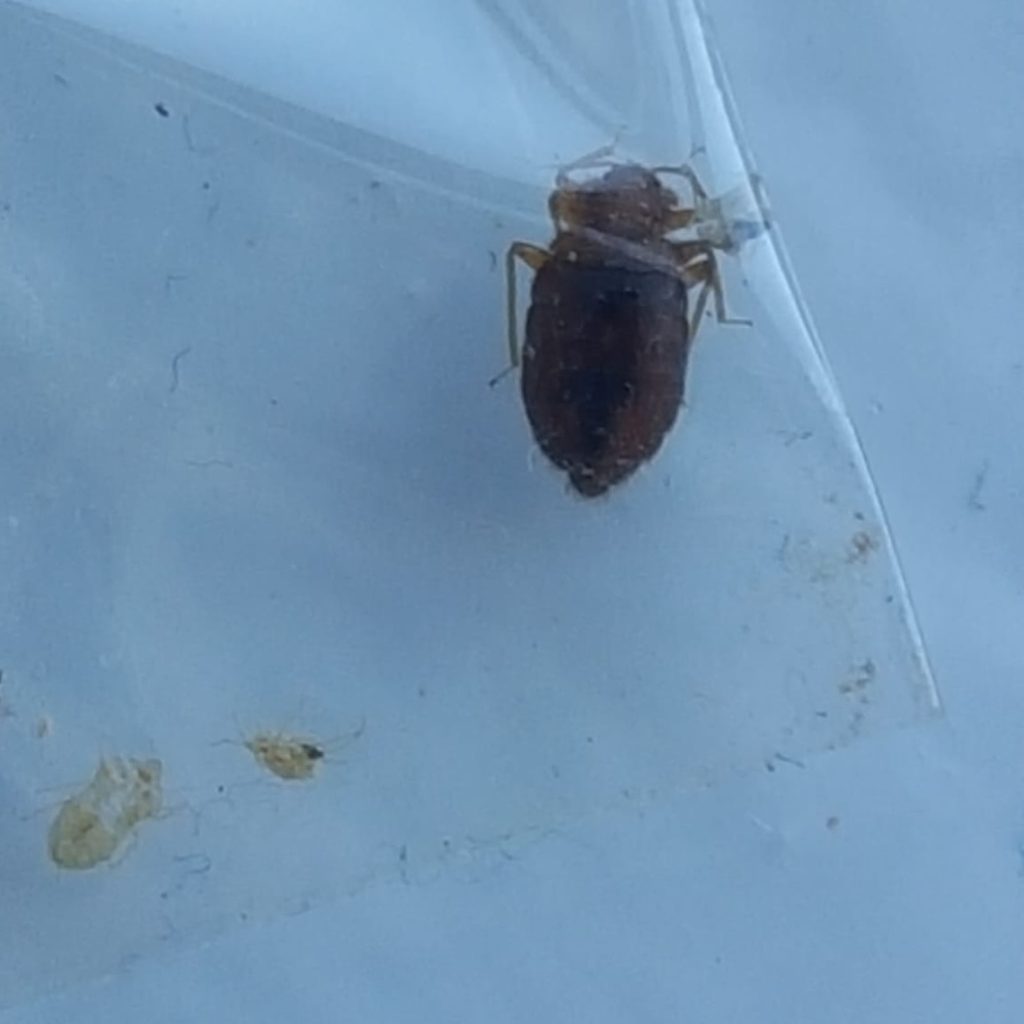
Adult Bed Bugs
Adult bed bugs are 5–7 mm in length with flat, oval bodies and 6 legs, as well as 2 antenna on their heads. When fed, bed bugs are a dark red colour, but they are more light brown if they haven’t eaten recently.
Bed Bug Nymphs
Once bed bug eggs hatch, they become bed bug nymphs, which go through several life cycle stages before becoming adult bed bugs. Initially, nymphs are translucent, turning from yellow to light brown before they fully mature. They feed on blood from warm blooded animals, including humans, to grow and go through 5 moulting stages, growing from 1.5mm to around 4.5, before eventually become fully-grown, a process that usually takes between 1-4 months.
Bed Bug Eggs
Bed bug eggs are white to pale yellow in colour and around 1 mm long. They look like gluey grains of rice, and are often laid in sticky clusters along mattress seams and inside bedding. Female bed bugs lay around 1-5 eggs per day, and can lay up to 200 in her lifetime, so just a few bed bugs can quickly become a significant bed bug problem.
Dead Bed Bugs
If they don’t lie dormant, bed bugs usually live for between 3 and 6 months. Once they die, bed bugs shrivel, and are often seen with their legs curling inwards. Live bed bugs are flat, but dead bed bugs look crinkled and brittle.
Other Signs Of Bed Bugs
While sightings are always the most obvious sign of bed bugs, their small size and ability to hide in tiny crevices means it can be difficult to see bed bugs. Some other signs of bed bugs include:
- Bed Bug Bites: One of the most common signs of a bed bug infestation is extremely itchy skin and small, round, red bed bug bites, usually found on exposed skin such as the neck, hands and feet.
- Blood On Your Mattress: Bed bugs like to burrow into mattresses, so if you see blood spots or dark faecal matter on your bedding, then this could be a sign of bed bugs.
- Bed Bug Eggs: Bed bugs lay small, white eggs that look like 1mm long grains of rice, which can be found on furniture or fabrics.
- A Strong Smell: Bed bugs often cause a sweet smell, which is highly unpleasant and can’t be removed with cleaning.
Insects That Are Mistaken For Bed Bugs
Other insects are sometimes mistaken for bed bugs, including:
- Fleas: Fleas are the most common insects mistaken for bed bugs, and while flea bites are similar to bed bug bites, fleas are a different shape, being more angular and with larger back legs for jumping.
- Bat Bugs: Bat bugs look very similar to bed bugs, but they primarily feed on bats, which are their preferred hosts, and can’t survive long on human blood.
- Booklice: Booklice are common household pests that feed on old book glue, among other things, and their small size means they can be mistaken for bed bugs, but booklice don’t feed on blood.
- Carpet Beetles: Being both small and round, carpet beetles are sometimes mistaken for bed bugs, but they are more colourful and also don’t eat blood, instead preferring natural fibres.
- Ticks: Ticks look a lot like bed bugs, particularly in terms of colour and shape, but they have 8 legs instead of 6 and are much slower moving, and will attach themselves to their host for long periods.
- Immature Cockroaches: Juvenile cockroaches are sometimes mistaken for bed bugs as they are small and a similar reddish brown colour, but cockroaches are a different shape to bed bugs, being much longer and thinner.
Book Professional Bed Bug Treatment
If you find a bed bug problem, then you need fast, effective bed bug removal services. DIY bed bug treatments are ineffective and can be toxic towards children and pets.
Having a bed bug problem can cause serious issues, including skin irritation and potential allergic reactions to bed bug bites. Bed bugs bite humans, but can also bite other warm blooded animals, and can bite cats, dogs and other pets, although they prefer human blood.
A long-term bed bug infestation can cause serious issues, including symptoms similar to PTSD, which is why fast bed bug control is crucial.
Pest In Peace offers professional bed bug control services throughout Cheshire. Our extensive pest control experience means we can quickly identify a bed bug infestation and use the appropriate treatment.
Our staff are RSPH Level 2 certified, with access to insecticides and bed bug treatments that aren’t available to the general public. So, as soon as you see signs of bed bug activity, you need to contact us on 07980 597423.