
 by hannah
How Many Species Of Wasps Are There In The UK?
Wasps are a common UK pest, but many people think that they’re all the same. So, you might be surprised to hear that there are more than 9,000 species of wasp found in the UK.
Fortunately, only a few of these species build the large nests and colonies that can cause serious issues for homeowners and business leaders.
As leading providers of wasp nest removal services across Cheshire, Pest In Peace understands the importance of understanding the difference between the different species of wasp found in the UK. Keep reading to find out more.
What Do Wasps Do?
Wasps are important pollinators that can be hugely beneficial to the local habitat. Additionally, wasps are predators, so wasps eat caterpillars, aphids and other invertebrates, making them a useful, natural form of pest control.
While wasps are generally good for the local environment, they can be dangerous if they build nests close to your home or business premises.
Common Wasp Species In The UK
There are more than 9000 wasp species in the UK, but many are solitary wasps, meaning they don’t build nests and are generally less aggressive. Some of the common social wasp species found in the UK that can become a pest are listed below.
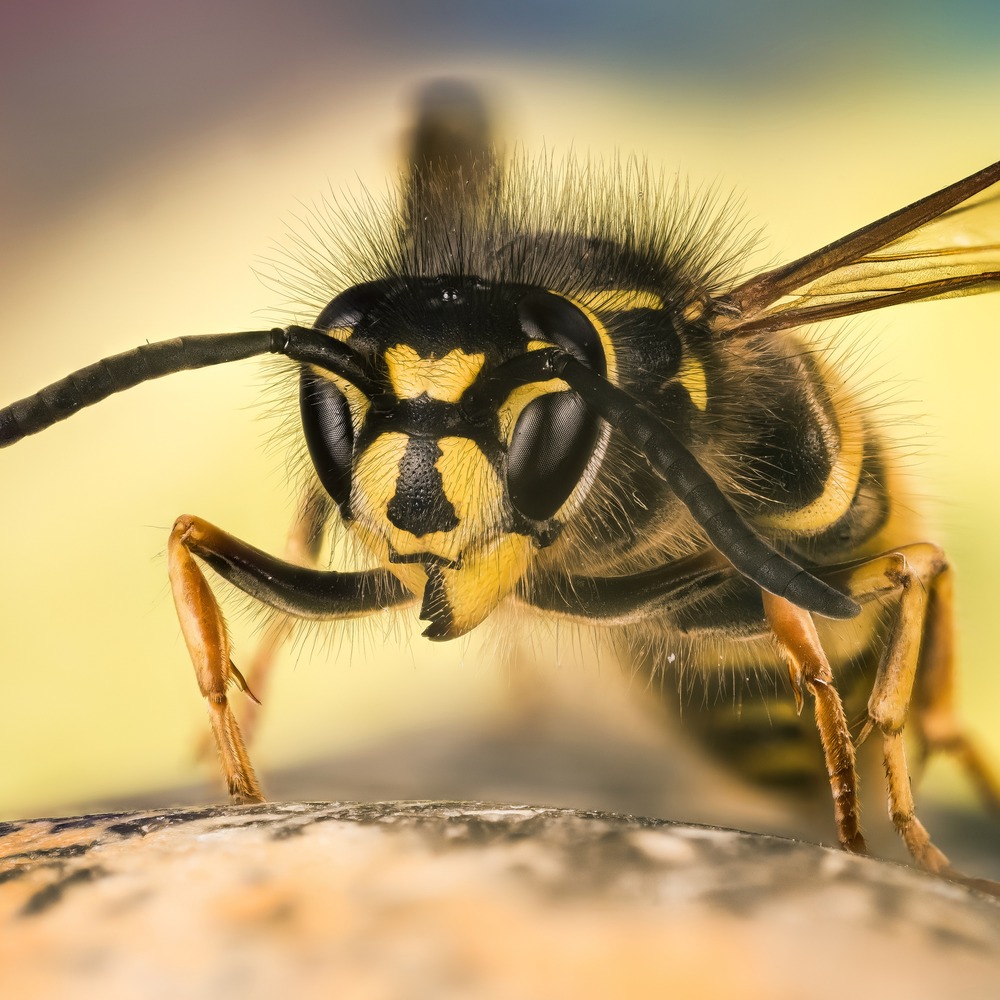
Common Wasps
As the name suggests, the common wasp (Vespula vulgaris) is highly prevalent throughout the UK, and is found in almost every environment, ranging from the countryside to urban areas. Worker wasps are 12–17 mm in length, with a lightly furred thorax and bright yellow stripes down its abdomen. Common wasps are distinguished by their tight ‘waists’ between their abdomen and thorax and the anchor shaped black mark on their heads.
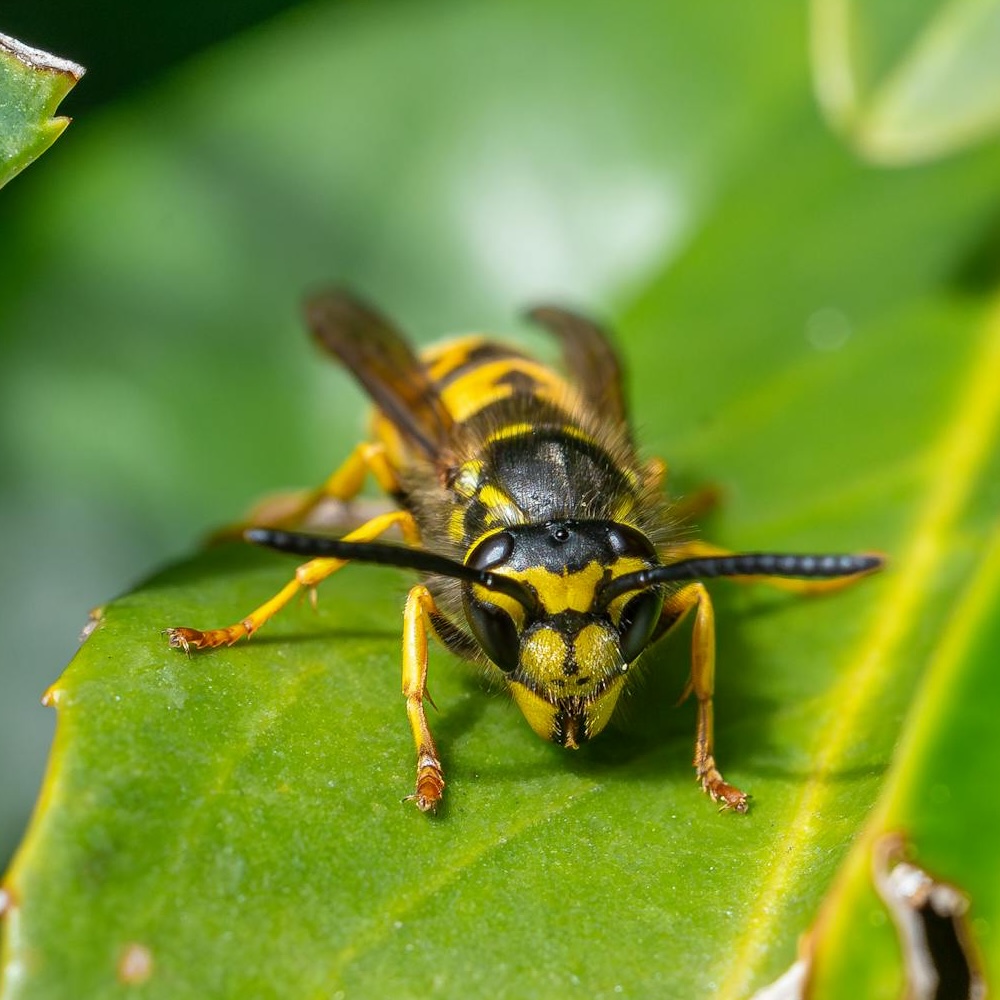
German Wasps
The German wasp (Vespula germanica) is a social species of wasp that can be highly aggressive towards humans. While they look similar in appearance to the common wasp, German wasps have 3 black dots on their faces instead of the distinctive anchor or hook mark seen on common wasps. They are also slightly larger in size than common wasps, with worker wasps reaching 12–20 mm in length.
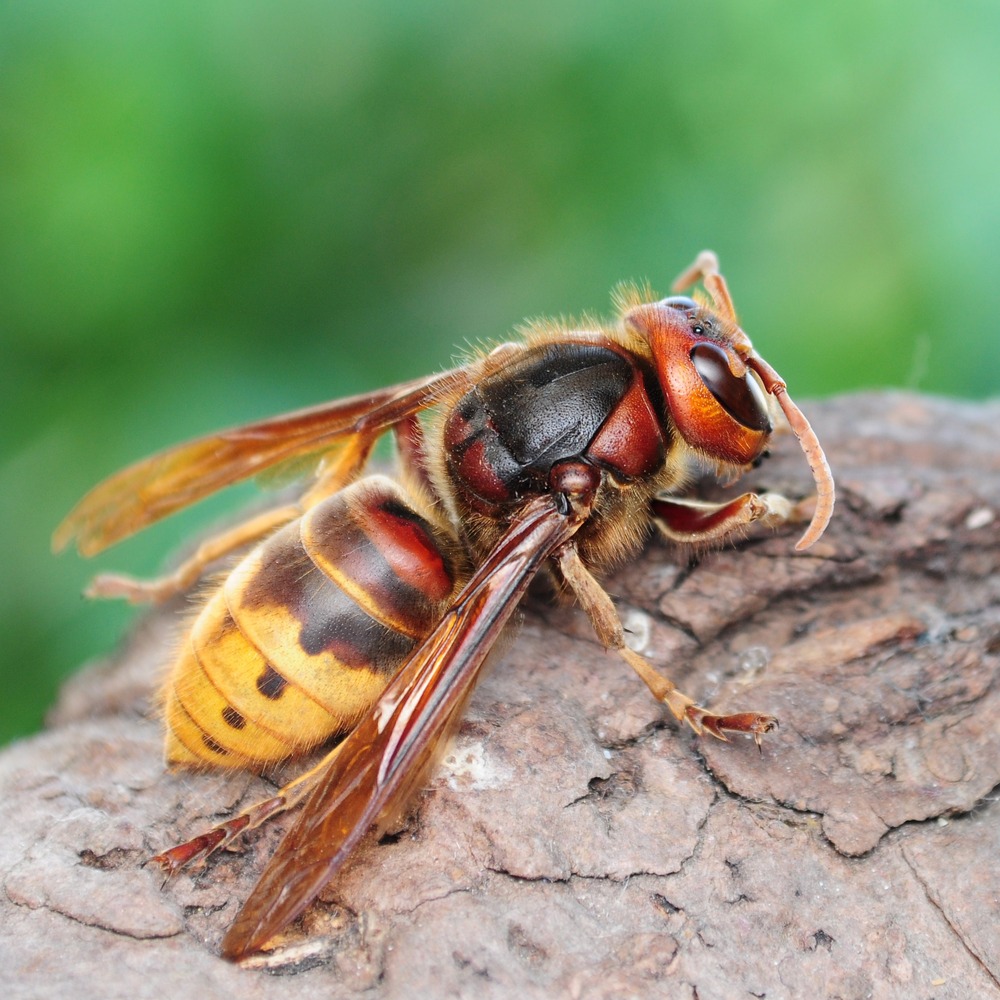
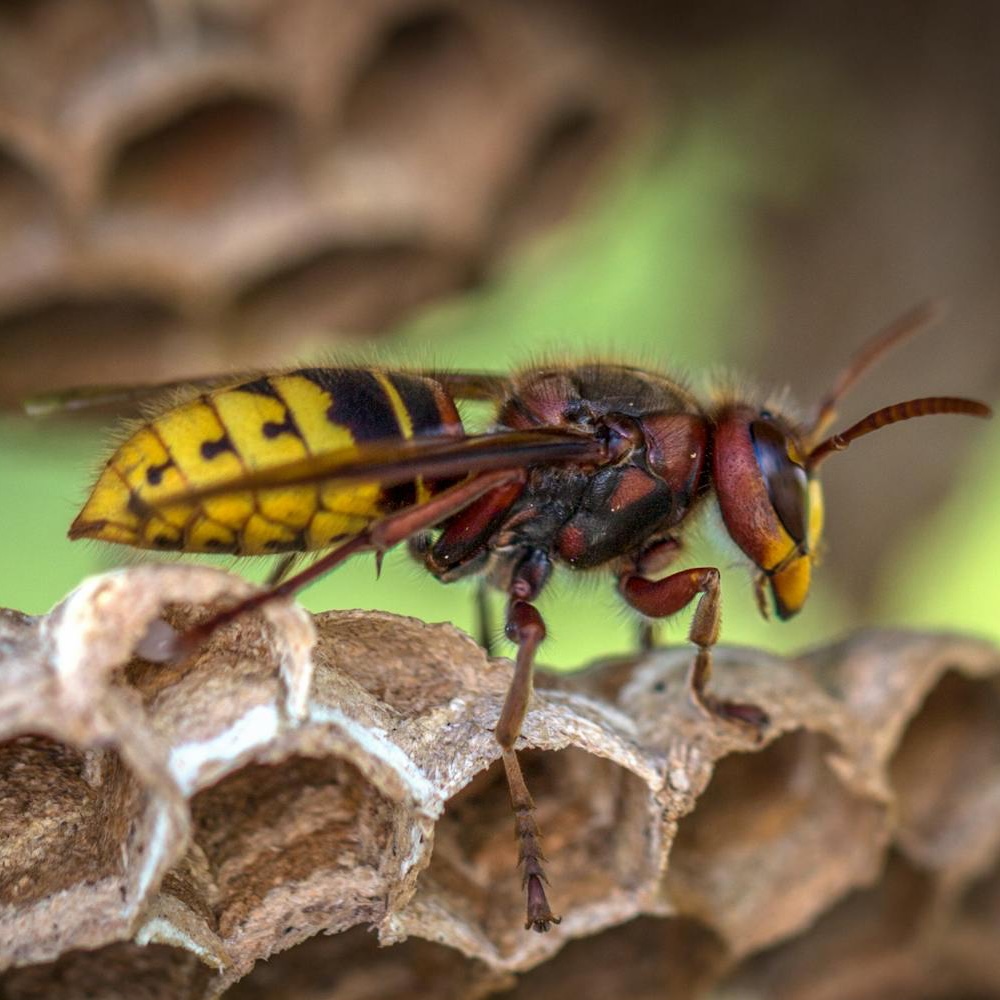
European Hornets
The European hornet (Vespa crabro) is significantly larger than most other wasp species, at between 25- 35 mm, with a reddish brown colour on its head and thorax, and bright yellow stripes on a dark brown background going down its abdomen. These native wasps have a particularly painful sting due to their large size but are usually less aggressive than other social wasps, and often avoid humans.
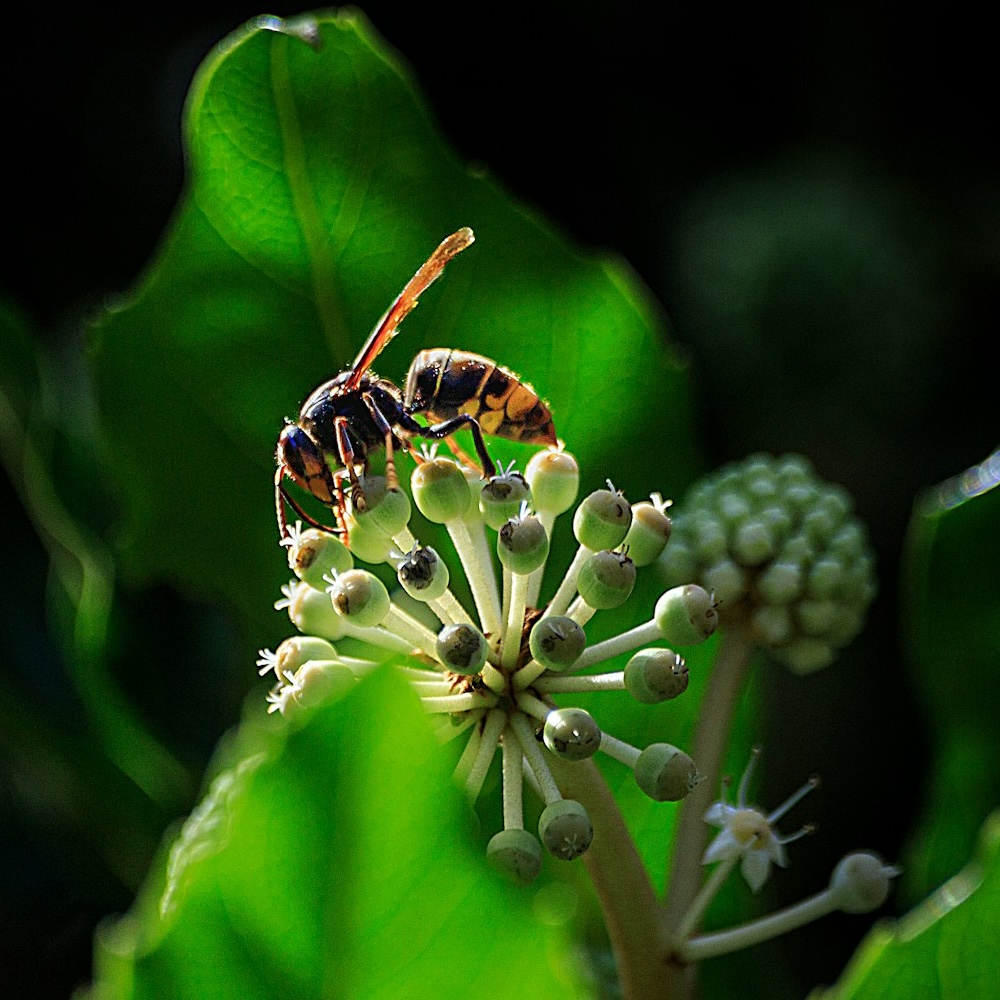
Yellow-Legged Asian Hornets
The yellow-legged Asian hornet (Vespa velutina) is an invasive species originally from Asia that has spread across Europe and the UK. Asian hornets are distinctive in appearance, with an almost entirely black body and yellow-tipped legs with a thick orange stripe down their abdomen. Asian hornets prey on honey bees and other native insects, meaning they can be a major issue for local biodiversity. If you see Asian hornets in your area, you need to report it immediately.
Red Wasps
The red wasp (Vespula rufa) is a common species of wasp often found in fields and areas where there are flowers. Male wasps of this species are between 11 mm and 18 mm in length, while queen wasps can reach 20 mm. Their distinguishing feature is a red tinge on their abdomens, and the fact that they usually build their nests on or under the ground.
The Difference Between Wasps And Bees
Wasps are often mistaken for bees, particularly honey bees, as they have the same yellow stripes and synched waists as many adult wasps.
There are some differences between wasps and bees, including:
- Hair: Bees, even honey bees, are covered in light fur, while most wasps have much less visible hair, and instead often have a sleek appearance, with outer skin that looks like amour. Bumblebees and other species can have more fur, which makes them very clearly not wasps.
- Nests: Bee nests are usually made from honey and wax, with distinctive honeycomb patterns on the outside. Wasp nests are made from chewed wood pulp, and the honeycomb is on the inside. The outside of a wasp nest is usually dry and grey, with a smooth surface and a hole in the bottom for the wasps to fly in and out of. Learn more about wasp nest identification in our guide: What Does A Wasp Nest Look Like?
- Stings: Many bees have barbed stings, which drop off and kill them when they sting, whereas wasps have smooth stings, and are often more aggressive and likely to sting.
- Diet: Bees are herbivores and live on a diet of nectar and pollen, whereas wasps eat insect prey, as well as sugary foods such as overripe fruit.
It’s important to know the difference between bees and wasps as some pest control companies will only remove wasps. At Pest In Peace, our team can also provide honey bee removal and relocation, so you can create a safe space and remove all winged insect pests. So, even if you can’t accurately identify the pest species you’re dealing with, our team can help and provide you with a solution.
What To Do If You Find A Wasp Nest On Your Property
Generally, wasps are good for the local environment, being useful pollinators. However, if you find a wasp nest on your property, such as inside a shed, chimney or loft space, then it can be difficult to avoid going near it.
Worker wasps may sting to protect the queen wasp and the nest, and these painful stings can be dangerous, particularly to anyone who is allergic to wasps.
As such, it’s important that you avoid the wasp nest and get professional wasp nest removal as soon as possible.
Wasps only use their nest once, and will abandon it during the winter to hibernate, before the new queens build a new nest and colony the next year. However, even empty wasp nests can be an issue, as they can be used by moths, carpet beetles and other insect species.
Thankfully, Pest In Peace provides expert wasp control and nest removal across Cheshire. Our team can remove the wasp colony and any nests, ensuring your safety. We also deal with other insect pests, including ants, bed bugs, fleas, flies and more.
If you’re in need of professional wasp or insect removal, contact us on 07980 597423 to book your appointment.